
Call us now :08045816307
 Send Inquiry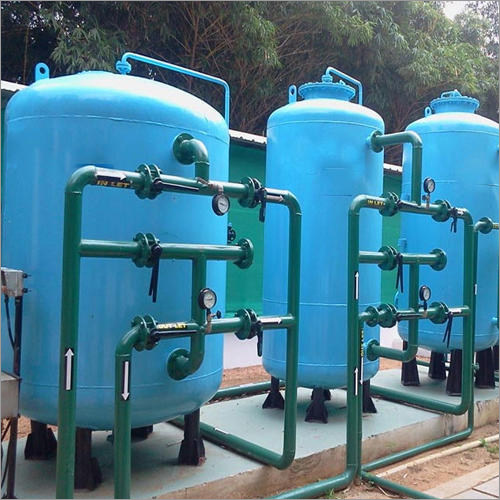
High Power Demineralisation Plant
180000 INR/Piece
Product Details:
- Pump Type Centrifugal Pump
- Noise Level <60 dB
- Water Out Conductivity <1 S/cm
- Frequency 50/60 Hz
- Flow Rate Up to 10,000 L/hour
- Power Consumption 2-8 kW (depending on capacity)
- Feature High Efficiency, Low Maintenance, Corrosion Resistant
- Click to View more
X
High Power Demineralisation Plant Price And Quantity
- 1 Piece
- 180000 INR/Piece
High Power Demineralisation Plant Product Specifications
- Floor Mounted
- Centrifugal Pump
- 220-440 V
- Electric
- 2-8 kW (depending on capacity)
- High Efficiency, Low Maintenance, Corrosion Resistant
- 75 KLD Liter/day
- Pure Water
- Stainless Steel / FRP
- Electric
- Demineralisation Plant
- <60 dB
- >99%
- Multi Grade/Activated Carbon/Bag Filter
- Full Automatic
- <1 S/cm
- Ion Exchange
- <1000 S/cm
- Industrial, Boiler Feed, Process Water, Pharmaceuticals
- 50/60 Hz
- 6.5-8.5
- 600-10,000 L/hr
- >95%
- Up to 10,000 L/hour
- Up to 98%
- Cation and Anion Exchange Resin
- Manual/Semi-Automatic/Automatic
- PLC Based (optional)
- 5-50C
- 1.5-4.0 kg/cm2
- 5-10 micron
- Customizable as per requirement
- Overload Protection, Leakage Detection
- Up to 10 years (with maintenance)
- Environmentally Compliant
High Power Demineralisation Plant Trade Information
- Ahmedabad
- Cash Advance (CA), Cash in Advance (CID)
- 1 Piece Per Day
- 1 Days
- Contact us for information regarding our sample policy
- Asia, Australia, Central America, North America, South America, Eastern Europe, Western Europe, Middle East, Africa
- All India
- iso
Product Description
We are the manufacturer & trader of Water Demineralization Plant. We are tend to committed to provide a best quality of Water Demineralisation Plant and ensure that excellent functionality and durability. Products offered by us are available in various size and range as per requirements of our clients.
Features:
- Easy to Install
- High capacity
- Require minimal maintenance
Efficient Demineralisation Technology
Utilizing ion exchange technology, this plant ensures removal of dissolved solids by guiding water through cation and anion exchange resins. With customizable configurations and high-grade materials, it provides consistent performance at volumes up to 10,000 liters per hour, guaranteeing conductivity below 1 S/cm and purity exceeding 99%.
Advanced Automation and Control
The system supports manual, semi-automatic, and fully automatic operation. For enhanced reliability and convenience, an optional PLC-based control system manages regeneration cycles, safety features such as overload protection, and leak detection. This automation streamlines operation and minimizes manual intervention.
Flexible Application and Installation
Designed to cater to industrial, pharmaceutical, and process water requirements, the plant is suitable for floor-mounted installation in diverse settings. Its modular construction allows size, volume, and capacity adjustments, ensuring seamless integration into new or existing systems.
FAQ's of High Power Demineralisation Plant:
Q: How does the High Power Demineralisation Plant work?
A: The plant uses a combination of cation and anion exchange resins to remove dissolved minerals from water, operating via ion exchange technology. Water passes through pre-filtration and then through the resin beds, producing high-purity water with a conductivity of less than 1 S/cm.Q: What is the recommended process for regenerating the resins?
A: Regeneration can be manual, semi-automatic, or automated, depending on system configuration. Regeneration involves flushing the resins with specific chemicals to restore their ion exchange capabilities. For PLC-based systems, the process is controlled automatically for greater efficiency.Q: When should the pre-filtration system be cleaned or replaced?
A: Pre-filtration elements (5-10 micron filters) should be inspected and either cleaned or replaced according to the water quality and volume processed-typically every few weeks or as indicated by differential pressure readings or maintenance schedules.Q: Where is the dematerialisation plant typically installed?
A: Installation is usually floor-mounted in industrial or commercial settings such as manufacturing plants, pharmaceutical facilities, boiler units, or wherever high-purity process water is required. The system's modular design allows customized installation as per site requirements.Q: What are the main benefits of using this plant in industrial applications?
A: Benefits include high water purity levels (>99%), low operational costs due to high recycle rate (up to 98%), robust corrosion-resistant construction, low maintenance, and compliance with environmental discharge standards, making it ideal for demanding industrial usage.Q: How often does regular maintenance need to be performed?
A: Regular maintenance, including inspection of filters, resins, pumps, and the control system, is generally conducted quarterly or as per manufacturer guidelines. Proper maintenance can extend the plant's service life to up to 10 years.Tell us about your requirement

Price:
Quantity
Select Unit
- 50
- 100
- 200
- 250
- 500
- 1000+
Additional detail
Mobile number
Email

Other Products in 'Demineralisation Plant' category


 Send Inquiry
Our Products
- RO Membrane
- Water Softener Plant
- Industrial Pump
- Water Treatment Chemicals
- Disc Filter
- Washing Machine
- Liquid Filling Machine
- Filter Cartridge
- Effluent Treatment Plants
- Multiport Valve
- Cartridge Filter
- FRP Vessels
- Ultrafiltration System
- Filtration Plant
- Cartridge Filter Housing
- Water Purifier
- Wound Filter
- Online Chiller
- Oxygen Ozonators
- Water Treatment Plants
- RO System and Plant
- Demineralisation Plant
- Membrane Housing


78,79,80 PANCHRATNA APEX, INDUSTRIAL PARK, VILLAGE-PALDI KANKAJ, DASKROI, Ahmedabad - 382405, Gujarat, India

Mr Chintan Jani
(Proprietor)
Mobile :08045816307
 Send Inquiry
 Send SMS
Developed and Managed by Infocom Network Private Limited.
 English
 Spanish
 French
 German
 Italian
 Chinese (Simplified)
 Japanese
 Korean
 Arabic
 Portuguese